%20--%3e%3csvg%20width='63.297821mm'%20height='39.29665mm'%20viewBox='0%200%2063.297821%2039.29665'%20version='1.1'%20id='svg8765'%20inkscape:version='1.1%20(c4e8f9ed74,%202021-05-24)'%20sodipodi:docname='OBALogoSingle2.svg'%20xmlns:inkscape='http://www.inkscape.org/namespaces/inkscape'%20xmlns:sodipodi='http://sodipodi.sourceforge.net/DTD/sodipodi-0.dtd'%20xmlns='http://www.w3.org/2000/svg'%20xmlns:svg='http://www.w3.org/2000/svg'%3e%3csodipodi:namedview%20id='namedview8767'%20pagecolor='%23ffffff'%20bordercolor='%23666666'%20borderopacity='1.0'%20inkscape:pageshadow='2'%20inkscape:pageopacity='0.0'%20inkscape:pagecheckerboard='0'%20inkscape:document-units='mm'%20showgrid='false'%20fit-margin-top='0'%20fit-margin-left='0'%20fit-margin-right='0'%20fit-margin-bottom='0'%20inkscape:zoom='1.1759259'%20inkscape:cx='179.85827'%20inkscape:cy='102.04724'%20inkscape:window-width='1920'%20inkscape:window-height='972'%20inkscape:window-x='0'%20inkscape:window-y='27'%20inkscape:window-maximized='1'%20inkscape:current-layer='layer1'%20/%3e%3cdefs%20id='defs8762'%20/%3e%3cg%20inkscape:label='Layer%201'%20inkscape:groupmode='layer'%20id='layer1'%20transform='translate(-31.351095,-50.101677)'%3e%3cpath%20style='fill:none;stroke:%233584e4;stroke-width:3.965;stroke-linecap:square;stroke-linejoin:round;stroke-miterlimit:4;stroke-dasharray:none;stroke-opacity:1'%20d='m%2077.07508,77.78787%2014.84134,8.87817%20V%2052.83397%20L%2034.08359,86.5521%20V%2053.69366%20l%2015.27351,9.31107'%20id='path8388'%20sodipodi:nodetypes='cccccc'%20/%3e%3c/g%3e%3c/svg%3e)
#federal reserve
Stock analysis posts tagged "federal reserve" from Openbook.

The Ten Year Has Stopped Taking Its Orders From The Federal Reserve
The ten-year Treasury yield has detached from the Fed policy path. Soft payrolls no longer rescue long bonds, so equity rallies built on weak growth data are borrowed.

Wall Street's week: a 24-year yield high and Accenture's best day
Treasury yields reached a 24-year high this week, capping Wall Street even as Accenture and Micron beat forecasts. Our five daily notes, reviewed.

Defensive Stocks Are Where A Five Percent Ten Year Does Its Damage
A ten-year Treasury at 5.18 percent does not threaten the whole US equity market. It threatens the income half of it. The right response is to cut equity duration, not equity exposure.
Two Nasdaq records, then a 5.2% yield: Wall Street's week
Two record Nasdaq closes, then a bond market that took them both back. The week Wall Street's AI rally met a 10-year yield at its highest since 2007.

US Market Breakdown: Fed Hikes, Chips Rebound, Week of 14 September 2026
The Federal Reserve raised rates for the first time since 2023, lifting its target range to 3.75%-4% and sending the 10-year Treasury yield to a 19-year high. Chipmakers then drove the Nasdaq to a record close on Monday.

NextEra Energy (NEE) Stock Analysis: Revenue Growth, Profit Margins and Valuation
The 10-year Treasury yield is back at 5.02% after the Fed's first hike since 2023. NextEra closed at USD 79.60, about 19% below its 2026 high.
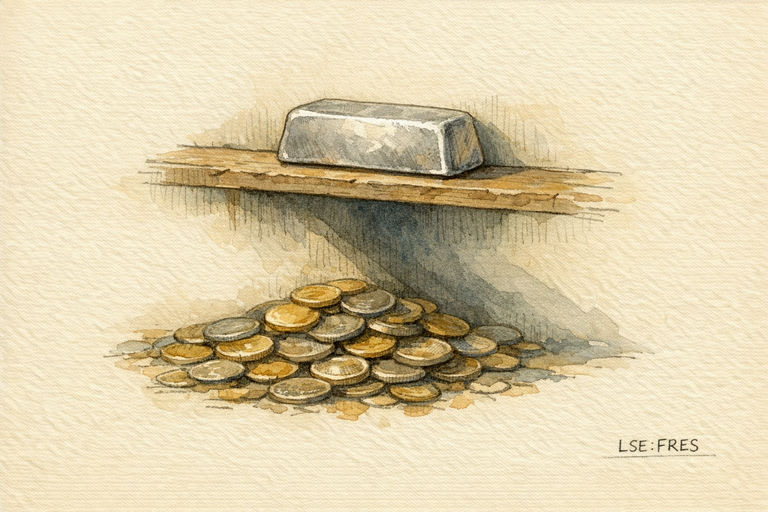
Fresnillo (FRES): Spot Silver Falls 20 Percent Below H1 Price
Spot silver at USD 62.82 sits 20 percent below the price Fresnillo realised in the first half. What the precious metals unwind leaves the LSE miner.

US Market Breakdown: Oil Tops $100, Chips Slide, Week of 7 September 2026
Oil above $100 and a 10-year Treasury yield touching 5% dragged the S&P 500, Nasdaq and Dow lower in a holiday-shortened week, before a weekend AI slowdown warning knocked chipmakers on Monday. Oracle, Adobe and Kroger reported.

DR Horton (DHI): Mortgage Rates Hit a 15 Month High Before the Fed
The 30-year fixed mortgage reached 6.76%, a 15-month high, with the Fed now debating a hike. For D.R. Horton the cost lands in margin, not in closings.

Oil Is Only This Cheap Because The World Is Emptying Its Storage Tanks
Oil near $105 looks like a market that has absorbed the shock. It has not. A 507 million barrel inventory draw has been holding the price down, and that buffer is running out.

Oil past $100 and a hawkish Fed rethink: Wall Street's week
Brent's run past $100 cost the Dow 1,350 points in three sessions, drove the hottest PPI of this cycle and left a Fed rise all but priced in for Wednesday.

US Market Breakdown: Jobs Surge Revives Hike Bets, Week of 31 August 2026
August payrolls came in at 162,000 against forecasts near 53,000, reviving bets on a September Federal Reserve rate rise and leaving the S&P 500 up just 0.1% on the week. Lululemon, Tesla and Broadcom fell; Snowflake soared.
AI Spending Has Become An Inflation Problem Before A Productivity Gain
The AI build-out has become a macroeconomic demand shock, and it is the marginal reason the Fed is close to hiking. Investors hold AI equities as shelter from the tightening they are causing.
Wall Street's week: an oil shock, a jobs shock and 36 points
Wall Street spent the week repricing a Fed rate rise rather than a cut. What we flagged on Monday, how Broadcom and Dell landed, and Friday so far.

US Market Breakdown: Nvidia Soars, Hike Bets Jump, Week of 24 August 2026
Fed chair Kevin Warsh's hawkish Jackson Hole debut sent September rate-hike odds sharply higher, yet Wall Street still closed the week ahead as Nvidia and Salesforce delivered. Monday's US-Iran flare-up then hit the Dow.

Why A Rate Hike Would Lower The 30 Year Treasury Yield, Not Raise It
The 30-year Treasury yield is now a supply variable, not a Fed variable. A December rate hike is the thing long bond holders should worry about least. The deficit and AI debt are the real drivers.

Nvidia delivered, then Warsh took over: Wall Street's week
Nvidia's $89bn data-centre quarter broke a three-day standstill on Wall Street, lifting the Nasdaq 1.57% on Thursday. Then Kevin Warsh took the podium.

US Market Breakdown: Chips Rally as Fed Fears Fade, Week of 3 August 2026
A shock US jobs report cooled Federal Reserve rate-hike fears and drove the S&P 500 to a record close, capping its best week since April. Nvidia and Palantir led a chip and AI rally, while oil's rebound above $87 clipped Monday's session.

Gold Is Right About This Jobs Report And The Nasdaq Is Not
Stocks and gold both rallied on the July payrolls miss, but they are pricing opposite outcomes. Gold has it right. The report said nothing about the inflation the Fed is actually fighting.
US Market Breakdown: Microsoft Soars as Apple Slides, Week of 27 July 2026
Microsoft's biggest one-day gain since 2008 and a 15% jump at Amazon offset a 7.4% slide at Apple, while a divided Federal Reserve held rates and the Dow closed at a record on 3 August.

US Market Breakdown: AI Capex Fears Meet Hawkish Fed, Week of 20 July 2026
Alphabet's capex shock and a divided Federal Reserve rattled US markets, before Microsoft's record 16% surge pulled the Nasdaq out of a six-day slide. Here is what moved Wall Street over the past fortnight, and why.