%20--%3e%3csvg%20width='63.297821mm'%20height='39.29665mm'%20viewBox='0%200%2063.297821%2039.29665'%20version='1.1'%20id='svg8765'%20inkscape:version='1.1%20(c4e8f9ed74,%202021-05-24)'%20sodipodi:docname='OBALogoSingle2.svg'%20xmlns:inkscape='http://www.inkscape.org/namespaces/inkscape'%20xmlns:sodipodi='http://sodipodi.sourceforge.net/DTD/sodipodi-0.dtd'%20xmlns='http://www.w3.org/2000/svg'%20xmlns:svg='http://www.w3.org/2000/svg'%3e%3csodipodi:namedview%20id='namedview8767'%20pagecolor='%23ffffff'%20bordercolor='%23666666'%20borderopacity='1.0'%20inkscape:pageshadow='2'%20inkscape:pageopacity='0.0'%20inkscape:pagecheckerboard='0'%20inkscape:document-units='mm'%20showgrid='false'%20fit-margin-top='0'%20fit-margin-left='0'%20fit-margin-right='0'%20fit-margin-bottom='0'%20inkscape:zoom='1.1759259'%20inkscape:cx='179.85827'%20inkscape:cy='102.04724'%20inkscape:window-width='1920'%20inkscape:window-height='972'%20inkscape:window-x='0'%20inkscape:window-y='27'%20inkscape:window-maximized='1'%20inkscape:current-layer='layer1'%20/%3e%3cdefs%20id='defs8762'%20/%3e%3cg%20inkscape:label='Layer%201'%20inkscape:groupmode='layer'%20id='layer1'%20transform='translate(-31.351095,-50.101677)'%3e%3cpath%20style='fill:none;stroke:%233584e4;stroke-width:3.965;stroke-linecap:square;stroke-linejoin:round;stroke-miterlimit:4;stroke-dasharray:none;stroke-opacity:1'%20d='m%2077.07508,77.78787%2014.84134,8.87817%20V%2052.83397%20L%2034.08359,86.5521%20V%2053.69366%20l%2015.27351,9.31107'%20id='path8388'%20sodipodi:nodetypes='cccccc'%20/%3e%3c/g%3e%3c/svg%3e)
#Market Wrap
Stock analysis posts tagged "Market Wrap" from Openbook.

UK Market Breakdown: Mid Caps Beat Blue Chips, Week of 28 September 2026
London's blue chips and its mid caps parted company in the week to Wednesday's close, as a new government equity-loan scheme sent housebuilders and their suppliers sharply higher while miners and energy dragged the FTSE 100 lower.

US Market Breakdown: Muse Rally Meets Bond Rout, Week of 21 September 2026
Meta's Muse AI agent drove a near-13% weekly gain and split Wall Street: chipmakers rallied while travel bookers slid. The Nasdaq added 2% as Treasury yields hit a 19-year high, then Monday gave much of it back.

UK Market Breakdown: Oil Round Trip, $9bn IPO, Week of 21 September 2026
The FTSE 100 closed Wednesday at 10,719 after three sessions steered by the oil price, while Airtel Africa confirmed plans to float Airtel Money in London at up to $9bn. Kingfisher raised guidance and Craneware slumped a quarter.

US Market Breakdown: Fed Hikes, Chips Rebound, Week of 14 September 2026
The Federal Reserve raised rates for the first time since 2023, lifting its target range to 3.75%-4% and sending the 10-year Treasury yield to a 19-year high. Chipmakers then drove the Nasdaq to a record close on Monday.
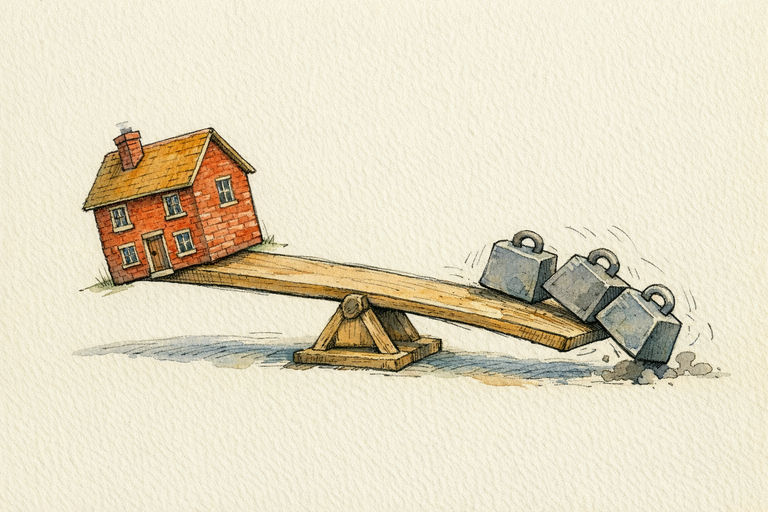
UK Market Breakdown: Builders Fly as Gilts Ease, Week of 14 September 2026
Barratt Redrow jumped almost 12% on Wednesday as gilt yields backed away from 19-year highs, capping three choppy London sessions in which oil, UK inflation at 3.1% and a weak jobs report pulled the FTSE 100 in every direction.

US Market Breakdown: Oil Tops $100, Chips Slide, Week of 7 September 2026
Oil above $100 and a 10-year Treasury yield touching 5% dragged the S&P 500, Nasdaq and Dow lower in a holiday-shortened week, before a weekend AI slowdown warning knocked chipmakers on Monday. Oracle, Adobe and Kroger reported.

UK Market Breakdown: Oil Tops $100, FTSE Slides, Week of 7 September 2026
Brent crude pushed above $100 a barrel on Wednesday and the FTSE 100 fell 1.38%, its worst session of the week so far. Victrex, Energean and Antofagasta rose, while Computacenter reversed a results-day rally.

US Market Breakdown: Jobs Surge Revives Hike Bets, Week of 31 August 2026
August payrolls came in at 162,000 against forecasts near 53,000, reviving bets on a September Federal Reserve rate rise and leaving the S&P 500 up just 0.1% on the week. Lululemon, Tesla and Broadcom fell; Snowflake soared.

UK Market Breakdown: Gilts Bite, Bidders Circle, Week of 31 August 2026
London's two-session week was dominated by a global bond rout: 10-year gilt yields hit their highest since June 2008 and the FTSE 250 fell to a one-month low, even as three UK companies agreed takeovers in a single day.

US Market Breakdown: Nvidia Soars, Hike Bets Jump, Week of 24 August 2026
Fed chair Kevin Warsh's hawkish Jackson Hole debut sent September rate-hike odds sharply higher, yet Wall Street still closed the week ahead as Nvidia and Salesforce delivered. Monday's US-Iran flare-up then hit the Dow.

UK Market Breakdown: Housing Cash Lifts Builders, Week of 24 August 2026
The FTSE 100 spent Monday to Wednesday inching towards 10,900 before easing back, while a near-£10bn government affordable-homes allocation gave Vistry its best day since 2020 and a third straight fall in Brent weighed on BP and Shell.

US Market Breakdown: Moderna Soars as Yields Bite, Week of 17 August 2026
Wall Street's week belonged to the bond market, as the 30-year Treasury yield hit its highest level since 2007 and dragged the S&P 500 to a 1.43% loss. Moderna rose 177% in a single day on cancer vaccine data, while Walmart fell 9%.

UK Market Breakdown: Oil and CPI Pin the FTSE 100, Week of 17 August 2026
The FTSE 100 ended Monday to Wednesday all but flat as Brent near $92 lifted BP and Shell, while UK inflation rose to 2.9% and the FTSE 250 slipped 0.9%. Kainos and Made Tech surged on guidance upgrades; Smith & Nephew fell as its finance chief quit.

US Market Breakdown: Record Highs Meet a Bond Rout, Week of 10 August 2026
Cooler US inflation lifted the S&P 500 to a record above 7,800 last week, but weak retail sales and a bond selloff that pushed 30-year Treasury yields to their highest since 2007 took the shine off by Monday.

UK Market Breakdown: Hormuz Oil Stalls FTSE 100, Week of 10 August 2026
London's blue chips slipped in all three sessions from Monday to Wednesday as Brent crude neared $90 a barrel, with Imperial Brands, Spirax and Legal & General among the fallers while Balfour Beatty hit a record high.

US Market Breakdown: Chips Rally as Fed Fears Fade, Week of 3 August 2026
A shock US jobs report cooled Federal Reserve rate-hike fears and drove the S&P 500 to a record close, capping its best week since April. Nvidia and Palantir led a chip and AI rally, while oil's rebound above $87 clipped Monday's session.

UK Market Breakdown: FTSE 250 Records, Astra Slides, Week of 3 August 2026
AstraZeneca fell 9% on a reported Bristol Myers Squibb merger approach, Prologis agreed a £14bn deal for SEGRO, and a slide in oil reshaped London's week as the FTSE 250 set back-to-back record closes.

US Market Breakdown: Microsoft Soars as Apple Slides, Week of 27 July 2026
Microsoft's biggest one-day gain since 2008 and a 15% jump at Amazon offset a 7.4% slide at Apple, while a divided Federal Reserve held rates and the Dow closed at a record on 3 August.

US Market Breakdown: AI Capex Fears Meet Hawkish Fed, Week of 20 July 2026
Alphabet's capex shock and a divided Federal Reserve rattled US markets, before Microsoft's record 16% surge pulled the Nasdaq out of a six-day slide. Here is what moved Wall Street over the past fortnight, and why.

Market Breakdown: Oil Swings Lift London to a Record, Week of 27 July 2026
London's blue chips closed at a record on Wednesday as oil swung from an 8.7% slump to a 7.9% rebound, while Wall Street suffered its worst day since April 2025. Unilever, Croda and Rio Tinto led the FTSE 100 higher; Barclays fell.